
Instead of AI

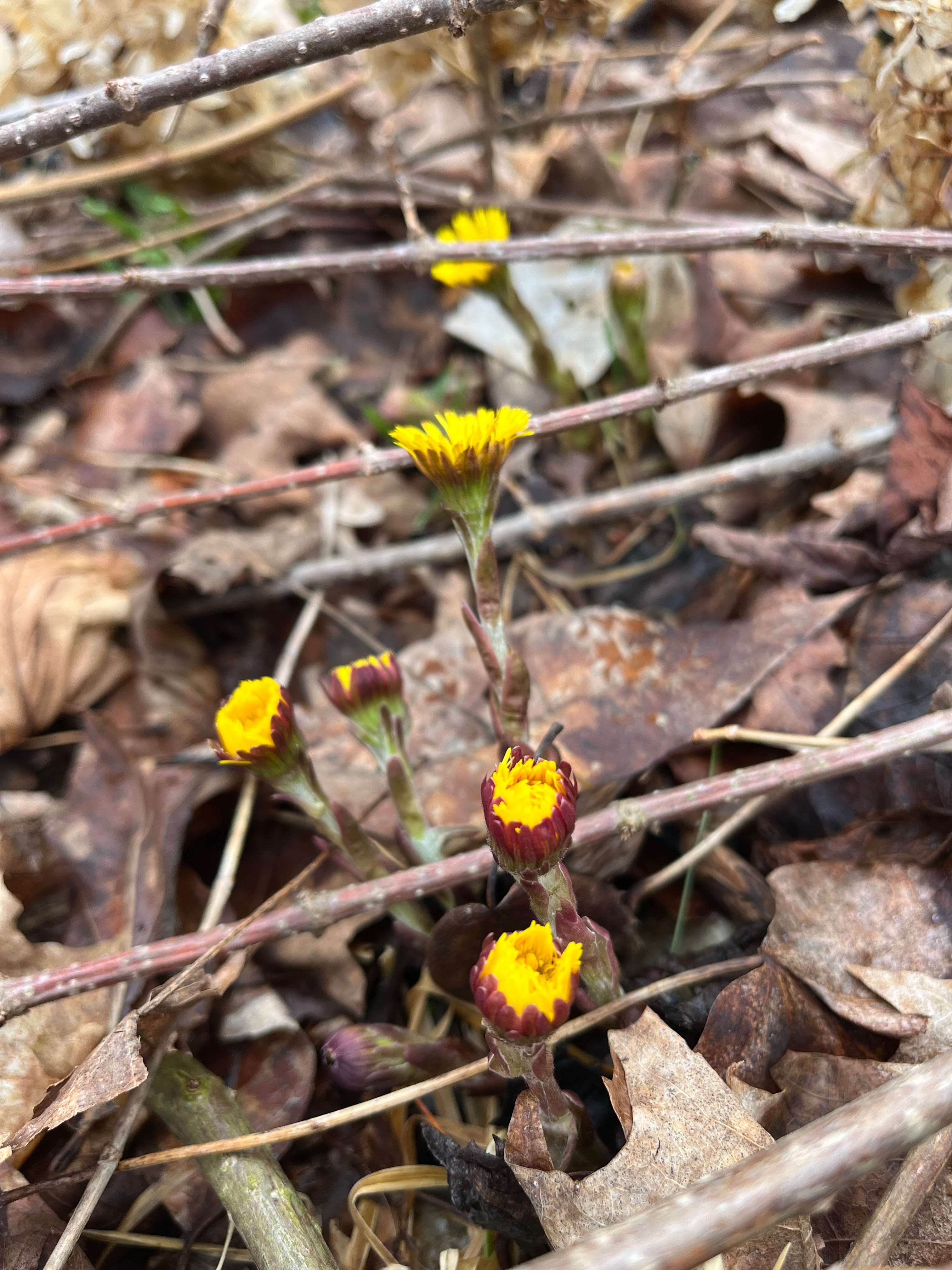
Instead of AI
Let’s use our hands to do
real things—whisking eggs
for banana bread that rises
in its pan like a miracle,
the teeth of a serrated knife
cutting each perfect slice.
Let’s write our own sentences,
stringing together words
as they come, bead by bead,
to make a necklace that fits.
Let’s pause on the forest trail
when we come upon a flock
of finches gathered like
parishioners around a patch
of open ground, worshipping
seeds exposed after a season
spent smothered by ice.
Let’s watch when they fly up,
flapping all at once, with a
sudden flutter of wonder
no machine will ever know.
We live in a world where meals, groceries, anything we need, can be delivered to our doorstep with the tap of a few buttons. We can ask machines to write, read, and (most alarmingly) think for us. We live at a time when actual intelligence is seen not only as a threat but as an afterthought, even a weakness. We are being asked to embrace a life, made simpler and easier—we are so often promised these days—by the proliferation of AI, two letters we may be weary of hearing about. I’ve heard from many friends and fellow artists over the past few years who say they are making a turn back to the tangible and actual in their lives, finding greater and more lasting pleasure—true joy—in doing real things for themselves and others, whether baking a loaf of banana bread or building a wooden bench by hand. The world being shaped for us, which we never asked for, has made us more susceptible to manipulation and control by outside forces, since this false reality leaves us lonelier and more depressed, longing for any scrap of connection, no matter how dissatisfying.
Yet perhaps the antidote is what we have possessed all along—an embrace of the innate, divine intelligence that lives inside each of us, that dwells beside us no matter what we do. If we can accept and access that intelligence, then when we feel the call to whisk those eggs for a new recipe, when we feel the drive to protest injustice, when we come upon that flock of finches in the forest and feel the flutter of wonder—we will receive the holiness of such moments of presence. We will know ourselves as holy as well, not needing some outer machine-intelligence to tell us how to live our days. It is a sacrament, and we are transfigured, each time we make something on our own—a poem, a painting, a garden, a struck-up conversation with a neighbor—that never existed before. AI is being hailed as a future-altering miracle, but these everyday creations and interactions are the true source of awe for us humans.
Invitation for Writing & Reflection: Write your own “Instead of AI” poem, borrowing the form I used here, or creating your own. You might start with a refrain of “I want . . .” and “I don’t want…” to truly articulate your own power over what is admitted into your life and mind. What are the physical acts of observation and creation that bring about your own “flutters of wonder?”
If you enjoy these free weekly emails, please consider making a donation here, or become a member and support this offering on a monthly basis.
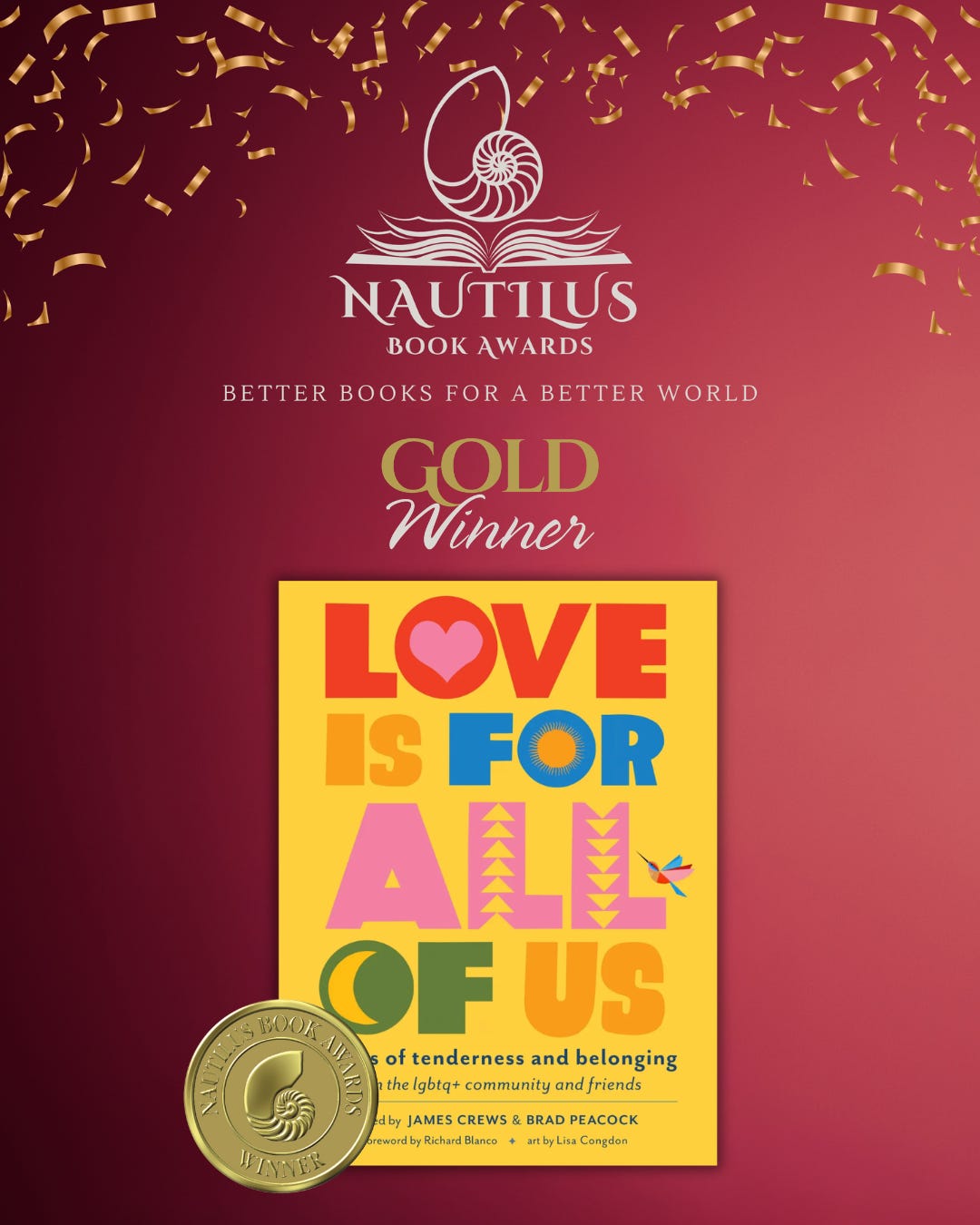
Friends, my husband Brad Peacock and I are so honored to have won a gold medal Nautilus Award for our anthology, Love Is for All of Us! This is so affirming for us at a time when LGBTQ + voices are being suppressed, and we have witnessed the ways our own book has been kept out of search engines and pushed out of people’s feeds. We hope this book will reach even more people as a result of this award, and will keep doing its healing work in the world, as it has healed us, too. I’m also beyond pleased to say that my own book of poetry, Turning Toward Grief, was awarded a silver medal for poetry as well by the folks at Nautilus!
Beautiful invitation and a reminder to remember the brilliance within each of us and to be present to the daily wonder around us. Congratulations to both on the award 🥇 🎉🎊👏💕😊
PS, I don't know how many folks realize this - I do because I have 3 teenagers and an adult child - the young generation hates AI and is also exhausted by it.