
Daffodil Teachers

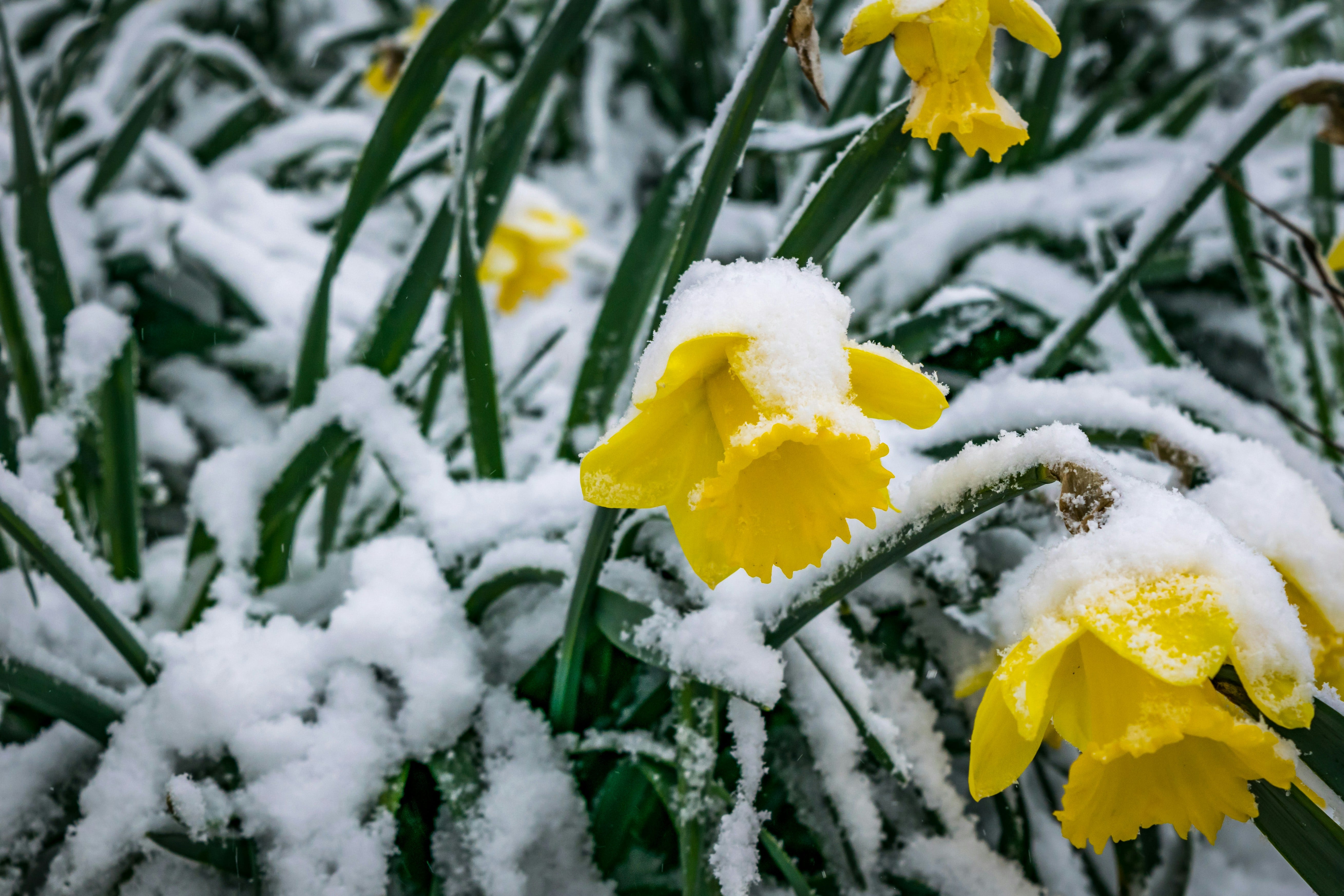
Daffodils
I kneel by the old stone wall
where the first green blades
of daffodils have sliced through
thawing earth, wanting to call them
brave, even naive for rising up
when they know the threat of pelting
sleet and snow to come. But they
were made for these harsh conditions,
containing tiny, needle-sharp crystals
of calcium oxalate, which protect
against frost and keep the animals
from feasting on them. We too were
built to resist, made to re-dream
this world, which grows ever colder:
try to swallow us, you will find
we cannot be consumed. Even
surrounded by ice, still we bloom.
The other day, Brad and I stopped at the edge of the driveway, next to the stone wall where the greenish-yellow blades of daffodils had risen up through thawing earth. Throughout each long winter, we wait for this moment—one of the first signs of emergent spring in New England—wondering how these perennials can possibly bloom in such unlikely conditions. As it turns out, they contain calcium oxalate crystals, known as a kind of “botanical anti-freeze,” which allow them to endure the sudden bursts of sleet and snow we know are still to come throughout March and April. These needle-sharp crystals found in the bulb, stem, and sap of the daffodil also keep animals like deer and rabbits from feeding on them—which is why you often see so-called “ghost-gardens” of daffodils still blooming where houses once stood: both bulb and plant carry their own natural defenses. I sometimes wonder how we humans can continue to thrive in the harsh conditions of a world that seems to grow ever colder and more callous by the minute, how we can become our best selves in the midst of such violence and cruelty. Like the daffodils, though, I also believe we were built to withstand such threats, designed for goodness in spite of the many ways we witness the worst of humanity each day. As Brad and I knelt on bare ground beside the daffodils, I felt this reminder deep in my core—we too are meant to rise up and resist, even when it feels dangerous or unwise to do so. We too are meant to expose the center of our being, what is called a corona in daffodils, so that through the warmth of our kindness and courage, others may sense it is safe to open and bloom, even when the wind howls, and we are surrounded by ice.
Invitation for Writing & Reflection: Reflect on the phrase, “We were made for this,” and see what it brings up for you. Were we indeed made for the harsh conditions we seem to be living through at the moment? Don’t be afraid to argue with the premise of my poem, or find your own examples of deep resilience in nature.
If you enjoy these free weekly emails, please consider making a donation here, or become a supporting monthly member below.
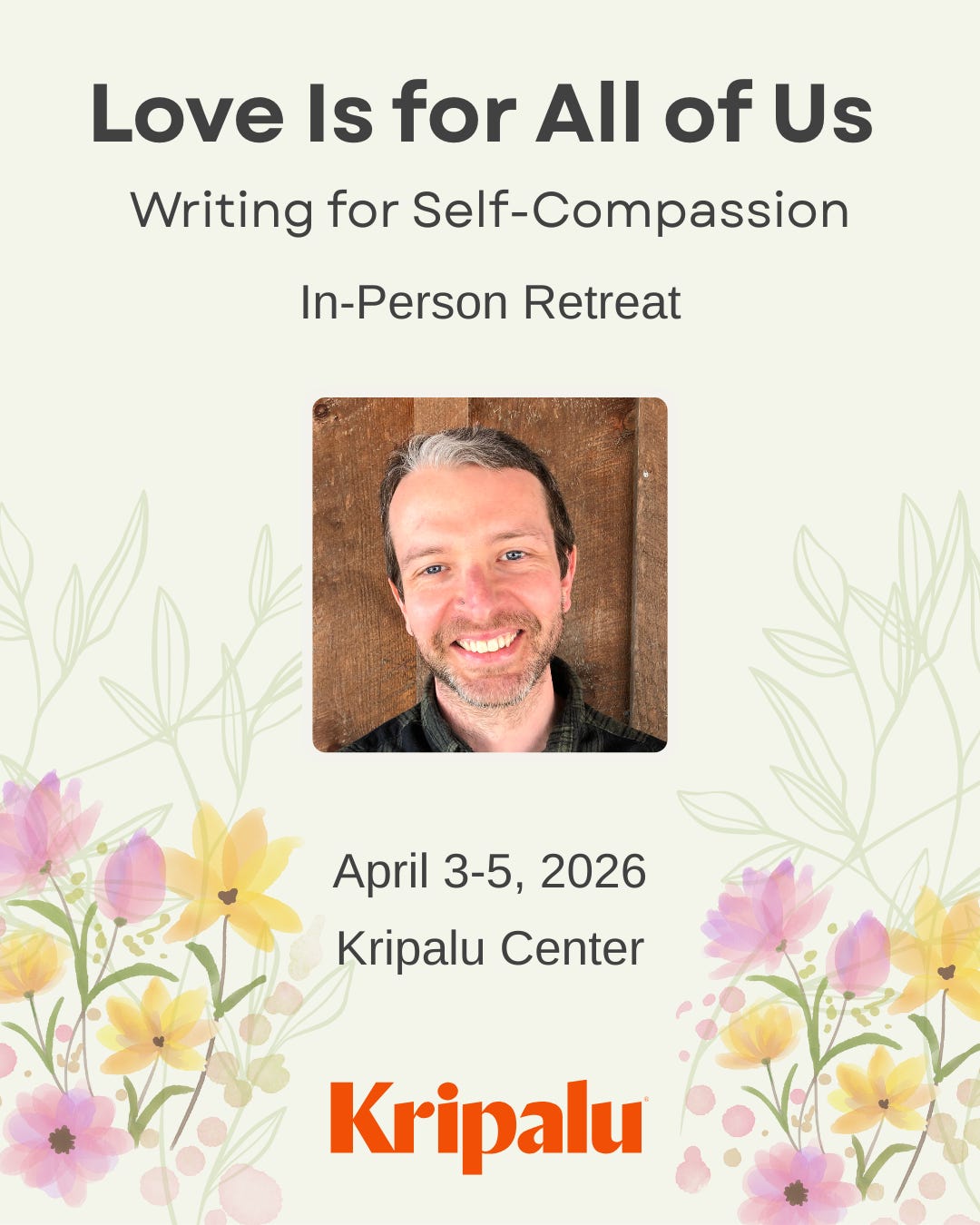
Please consider joining me in two weeks for a weekend retreat at the Kripalu Center in Stockbridge, Massachusetts. As we welcome spring together, we’ll enjoy amazing meals, yoga classes, and the kind of grounded, guided writing practice that feels like a meditation. At this fraught time, I feel it is more important than ever to gather in nourishing spaces like this, and renew ourselves for all that is to come:
https://kripalu.org/experiences/love-all-us-writing-self-compassion
photo credit: Photo by Armen Sarkissian on Unsplash
I love your poem and reflection on the nature of daffodils. I was also inspired by the daffodils this week, their bright yellow cheeriness (naivety?) against the cold snow. Here's my little altar poem:
the snow teases the sun
dancing, light as powdered sugar
dusting the daffodil’s optimism
Just gorgeous, James. Your prose as well. Love to you both.